 English
  Norwegian Bokmål
 6th International Barcode of Life Conference
The sixth international conference on DNA Barcoding just recently ended with wise words from Thomas Lovejoy, Dan Janzen and Paul Hebert: The species on our globe are going extinct faster than ever before and we have an urgent need to retrieve more knowledge of our biodiversity before it is gone for good.
The conference in Guelph, Canada was impressive in all sorts of ways and the scientific depth truly underlined the theme “Barcodes to biomes”. With more than 30 excellent invited speakers and 600 delegates from 60 countries, the meeting became an unparalleled academic success. Abstracts from all talks and posters have been peer-reviewed and published in the journal Genome.
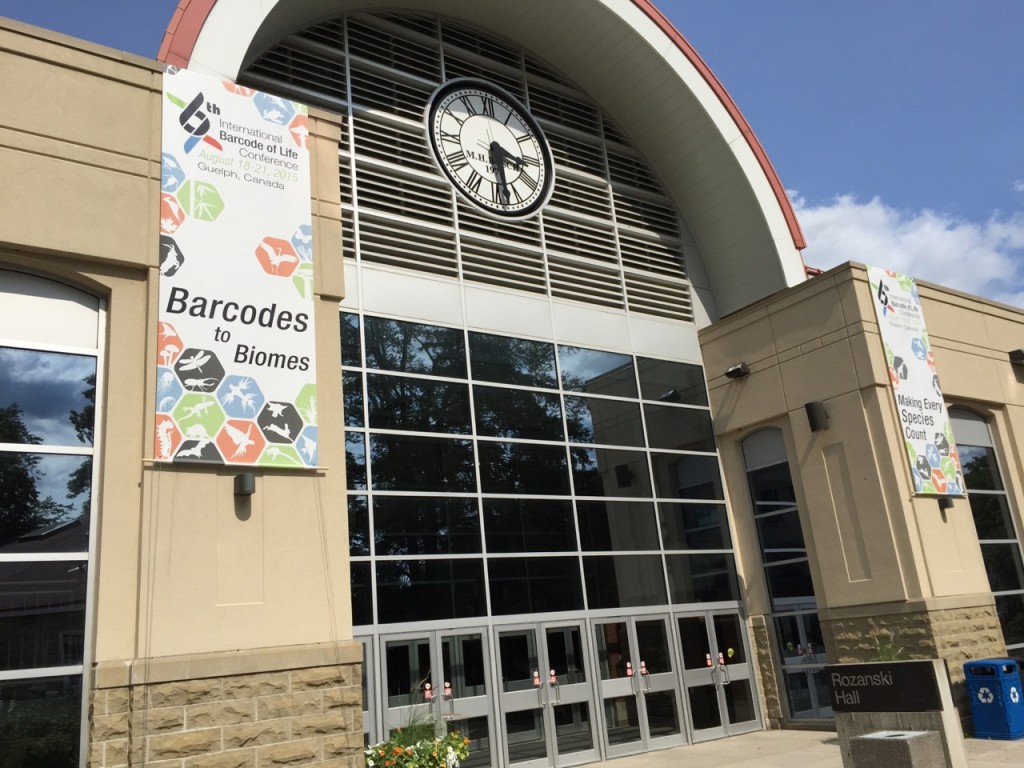 All oral presentations were held in the Rozanski Hall at the University of Guelph. Photo Torbjørn Ekrem (CC-BY).
In addition to the academically strong profile, the organizers clearly had valued good social settings in the planning of the conference. Moreover, a few other special arrangements made this a memorable event: The group photo (or rather film) was shot with a drone, the conference had its own beer (that had been barcoded of course) and the talks of all invited speakers was streamed live on YouTube. Most impressive, however, was perhaps that the results from a bioblitz held in a nearby reserve the day before the conference were ready by the end of the meeting! The specimens have been barcoded and the results assembled in a paper with 120 authors already submitted to the Biodiversity Data Journal. If you think I am the only one that is impressed by the 6th International Barcode of Life Conference, check out tweets with the hashtag #dnabarcodes2015.
The meeting decided to establish the International Society for the Barcode of Life (ISBOL) and an interrim board will be established to work out the guidelines and tasks for the society. Two important areas will be the development of new standards for DNA barcoding as technology advances and support the organization of international conferences.
It will be difficult to exceed this year’s conference in scientific breadth and organization. Perhaps this was one the reasons why Prof. Michelle van der Bank from the University of Johannesburg suggested the Krüger National Park as venue for the next conference in 2017. A setting in one of the world’s most famous protected wildlife areas certainly should attract many participants!
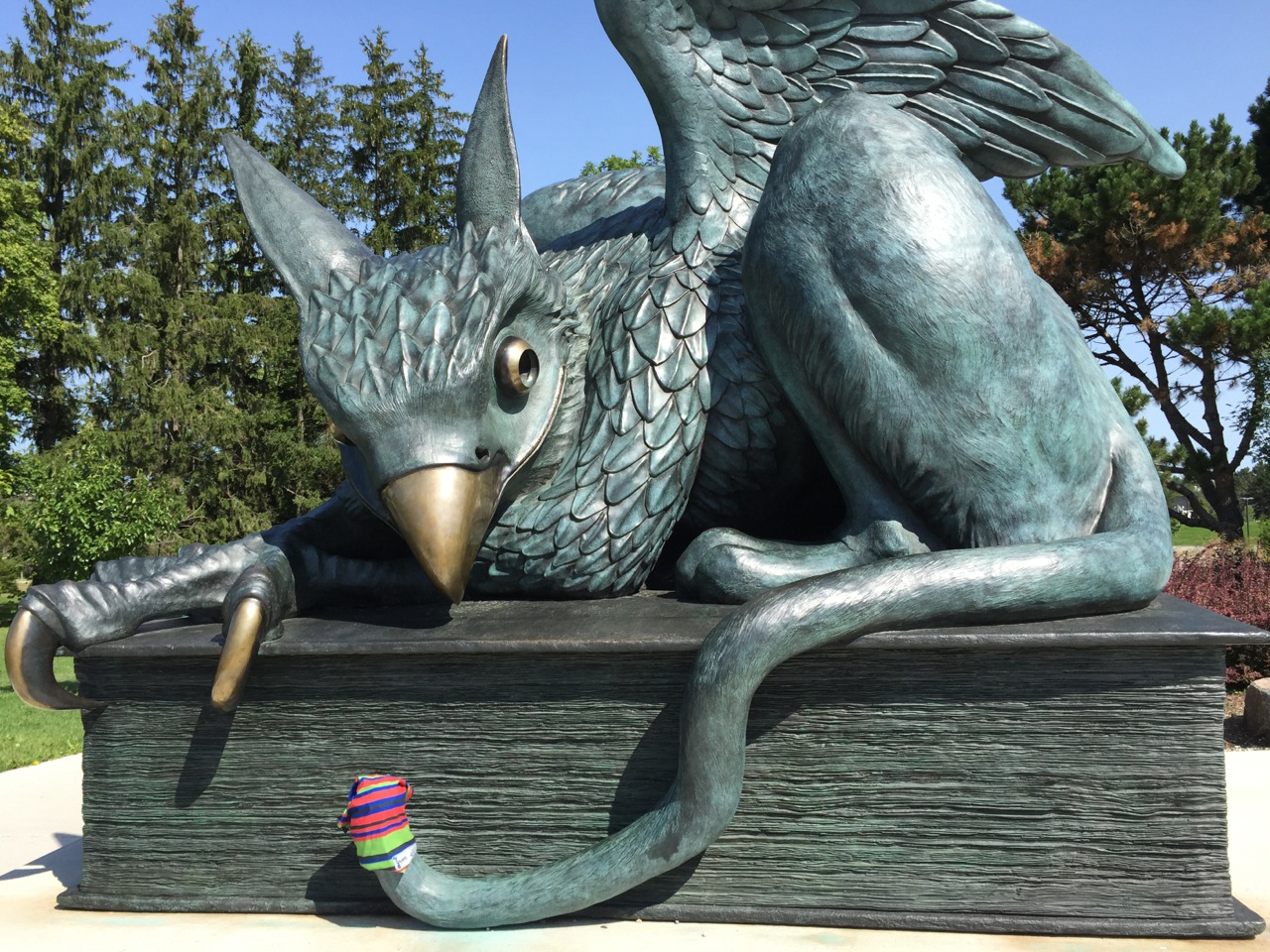 The University of Guelph gryphon bids #mydnabarcode farewell. Photo Torbjørn Ekrem (CC-BY).