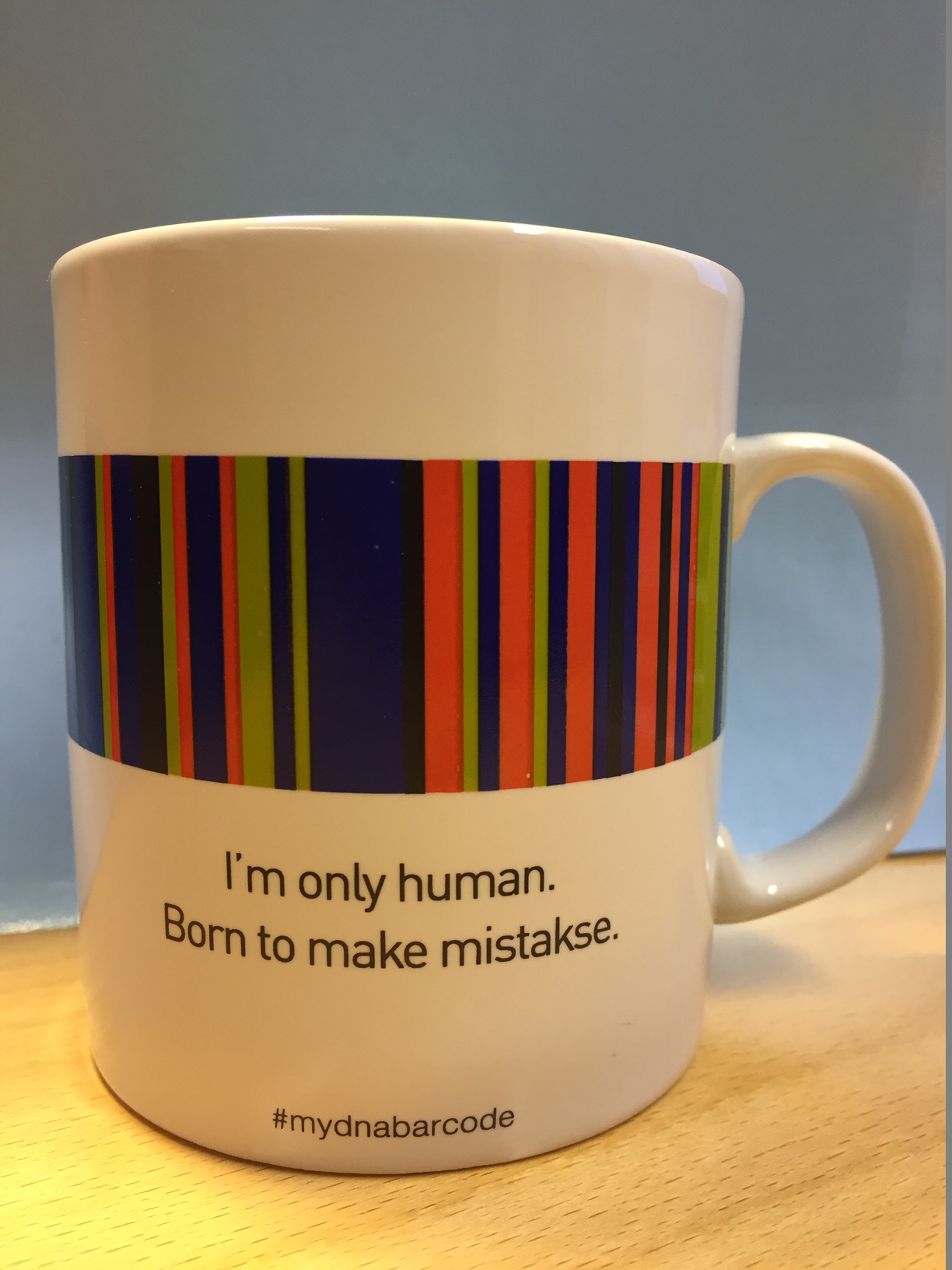
Would you like to see your favorite DNA barcode photo on norbol.org? A beautiful (some think scary) photo has dominated our front page for a while, and it is time for a change. NorBOL is therefore inviting you to a photo/illustration challenge where the winner will have her/his contribution on the front page of norbol.org and receive a #mydnabarcode buff and a #mydnabarcode mug. Send your best photos or illustrations to Torbjørn by the 15th of February to participate. The image must be in landscape format and the winner will be chosen at the NorBOL steering group meeting on March 2. Good luck!
Author: torbjoe
-
Fotokonkurranse!
Et vakkert (og noen mener skummelt) bilde har preget forsiden til norbol.org i en god stund, og det er på tide med en utskiftning. NorBOL inviterer derfor til fotokonkurranse der vinneren får bildet sitt på forsiden av norbol.org, #mydnabarcode buff og #mydnabarcode krus. Send ditt beste forslag til Torbjørn innen 15. februar for å bli med i trekningen. Bildet eller illustrasjonen må være i landskapformat og vinneren kåres på styringsmøtet i NorBOL 2. mars. Lykke til!
-
Workshop i DNA-strekkoding ved Tromsø Museum
NorBOL og Tromsø Museum – Universitetsmuseet ønsker velkommen til workshop i DNA-strekkoding 8-10 februar 2016. Målet med denne workshopen er å gi deltagerne en praktisk og teoretisk innføring i DNA strekkoding gjennom NorBOL og Barcode of Life Data Systems (BOLD).
Workshopen vil foregå i Tromsø Museums lokaler i Telegrafbukta 8-10 februar 2016. Vi starter med en kort innføring i bruk av strekkoding innen forskning og forvaltning, mens det meste av workshopen vil bli viet til praktisk arbeid med eget materiale. Det forventes dermed at deltagerne tar med seg eget materiale av den organismegruppen de skal arbeide med samt tilhørende data for opplasting i BOLD. Dyr, planter og sopp fra Norge er aktuelt, spesielt materiale fra kartleggingsprosjekter finansiert av Artsprosjektet. Deltagere som nettopp har startet egne prosjekter og ikke har eget materiale, kan jobbe med materiale fra våre samlinger.
I løpet av workshopen skal deltagerne arbeide med alle trinn i prosessen for klargjøring av en DNA-prøveplate. Dette innebærer fotografering og dataregistrering av hver enkelt individ samt prøvetaking og innsending av plater og data til BOLD. Vi vil gå gjennom følgende trinn:
- Oppbygging av Barcode of Life Data Systems (BOLD) og hvordan starte et nytt prosjekt.
- Vevsprøvetaking og fylling av plater.
- Billedtaking og opplasting av bilder til BOLD.
- Innsending av egenproduserte sekvenser og trace-files til BOLD.
- Analysering av sekvenser/diversitet med verktøy i BOLD.
Workshopen er finansiert av NorBOL og vil dekke reise på rimeligste måte samt overnatting (Sydspissen hotell) for en person per pågående prosjekt.
Workshopen har en begrensing på 10 personer og påmelding gjøres til Marie Føreid Merkel per epost (marie.k.foreid_at_uit.no) innen 20 januar.
Påmeldingen må inneholde:
- Navn, adresse og kontaktinformasjon.
- Om du har behov for overnatting.
- En kort beskrivelse av hvilken organismegrupper du arbeider med inkludert følgende informasjon:
- Hvor mange individer du tenker å bearbeide under workshopen. En DNA-prøveplate har plass til 95 prøver, men på grunn av den videre analysen er det begrenset hvilke organismegrupper som kan dele samme plate. Vi trenger dermed å vite hvilke organismegrupper det planlegges å jobbe med, samt antallet individer.
- Omtrentlig størrelse på organismene så vi kan vurdere hva slags fotoutstyr du trenger for å kunne dokumentere dine referanseindivid («vouchers»).
- Informer oss gjerne om eventuelle tidligere erfaringer med sekvensering / strekkoding.
Vi håper at mange har mulighet til å delta.
-
Desembernatt ved Tromsø Museum
Torsdag 3. desember var det i tradisjonens tro igjen duket for Tromsø museums årlige Desembernatt.
Dette er et arrangement hvor alle ansatte får muligheten til å være med å lage aktiviteter og vise fram kunnskap til publikum. I fjor var DNA-strekkoding og NorBOL representert ved aktiviteten «mysterie juicen» hvor nytten av DNA strekkoding og et referanse bibliotek ble formidlet. I år var det selve arbeidet med oppbyggingen av referansebiblioteket som ble forsøkt formidlet ved å holde de botaniske samlinger åpne for publikum og vise hvordan disse blir strekkodet.
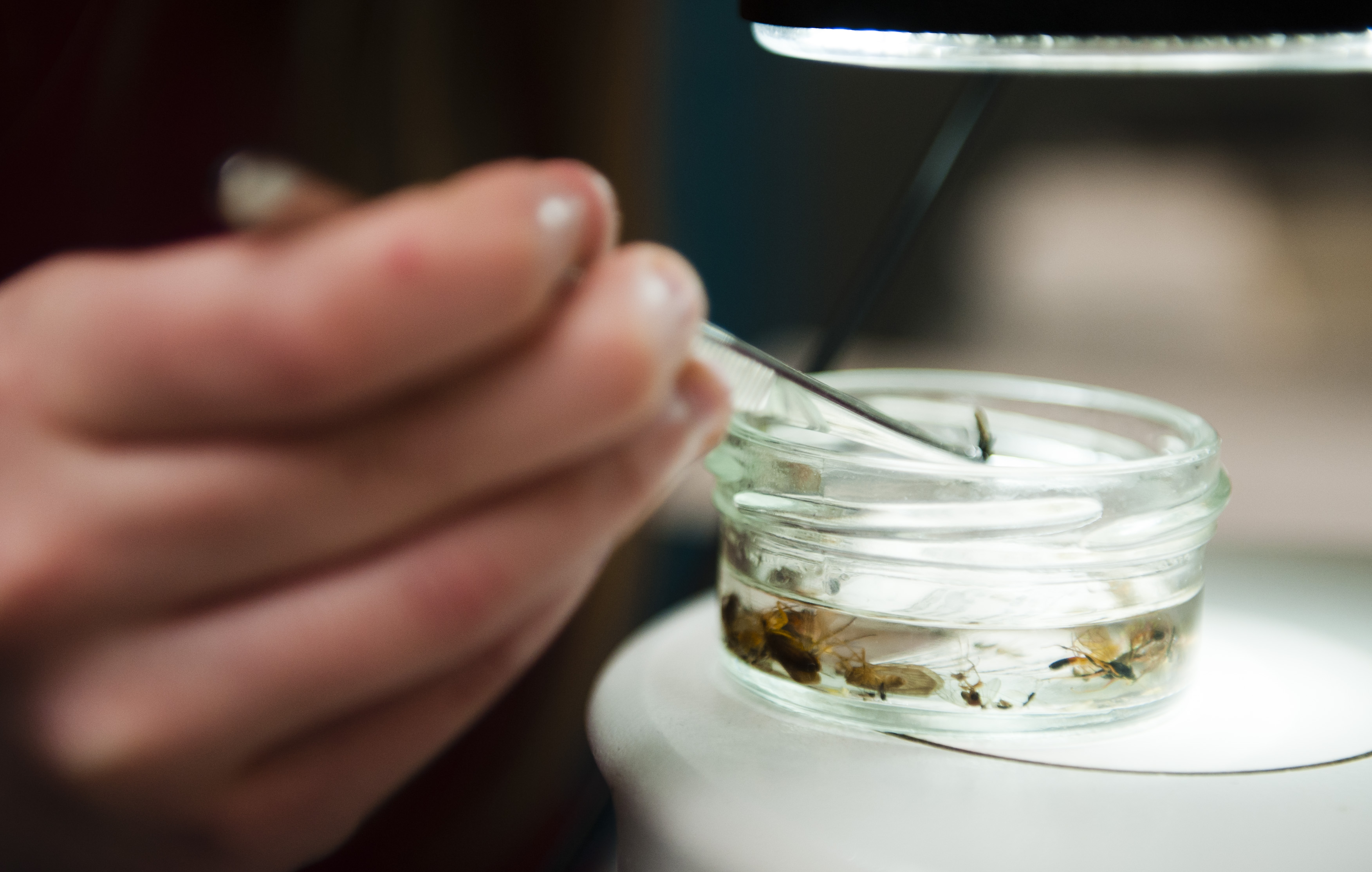
Insekter under lupen. Foto Adnan Icagic CC-BY.Oppe i utstillingene holdt førsteamanuensis Jostein Kjærandsen og Amandine Deschamps en aktivitet der barna fikk plukke ut og studere forskjellige insekter i lupe. Hva DNA-strekkoding er og hvordan det fungerer ble formidlet til foreldre og andre interesserte. Nede på botanisk i Telegrafbukta var det åpne magasiner og noen interesserte trosset været og kom ned for å ta en titt. Der ble det gitt en grundig omvisning i samlingene, prosessen fra sopp/lav/pante i naturen til ferdig innordnet i samlingene ble beskrevet og vist med eksempler. Viktigheten av slike samlinger ble formidlet og NorBOL ble trukket fram som et eksempel på arbeid som er tilknyttet museumssamlingene.
Marie K. Føreid Merkel, barcode manager Tromsø Museum
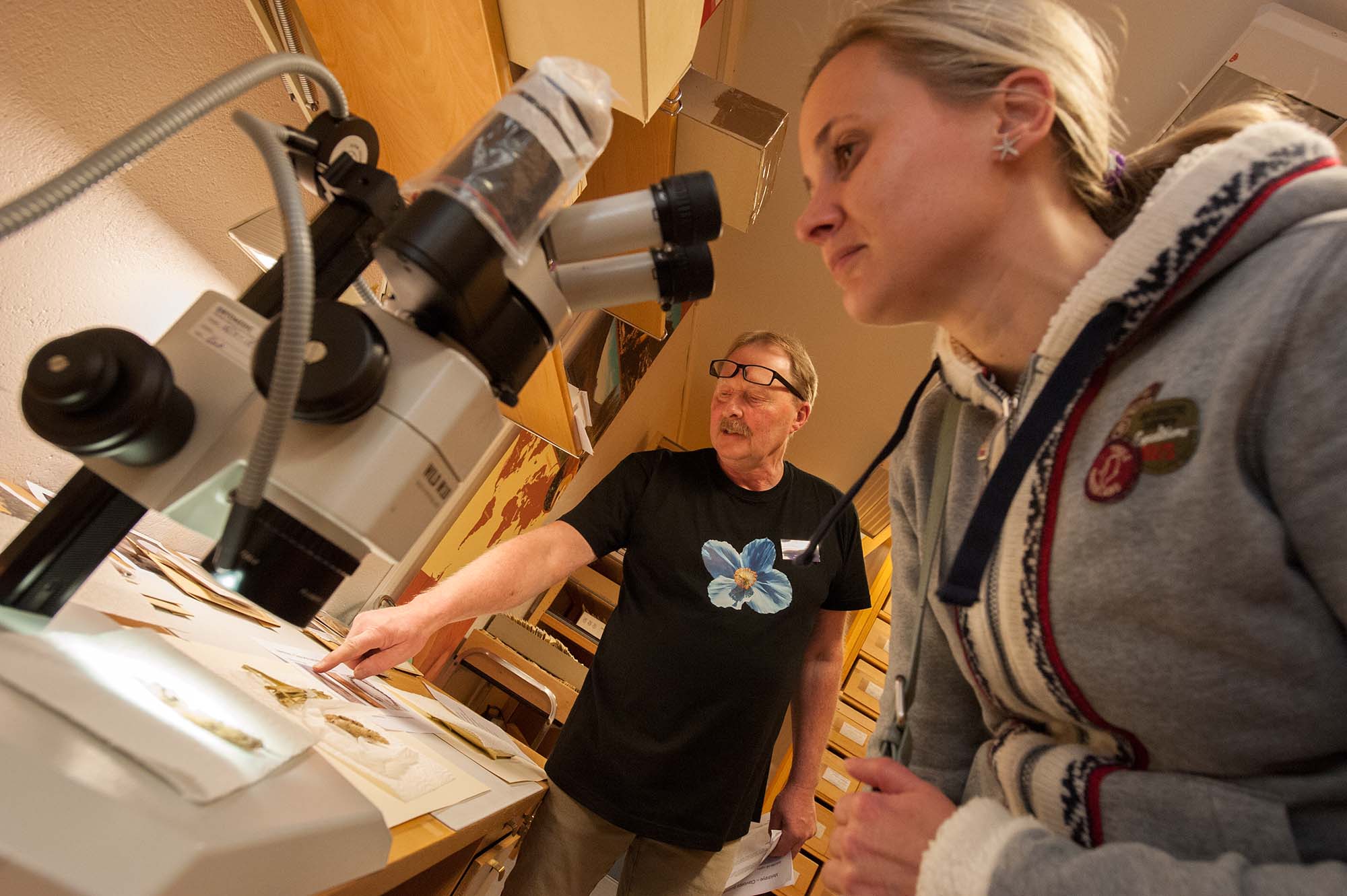
Geir Mathisen viser publikum mikrosopp fra herbariet. Foto Mari Karlstad CC-BY. -
Report from the Symposium on Biodiversity and DNA Barcoding
The symposium Biodiversity and DNA Barcoding was held at the Scandic Nidelven hotel 11-12 November 2015. Nearly 100 participants from Norway, Sweden, Canada, Finland, Germany, Czech Republic and UK had found their way to Trondheim, making this meeting larger than originally expected. The conference turned out to be a good meeting place for nature managers, barcoders, participants in the Norwegian Taxonomy Initiative and others interested in biodiversity and DNA barcoding.
As the program can confirm, there was a great diversity in the talks, both on topics and organism groups. We were guided through taxonomic challenges in fungi, marine invertebrates and insects, many of which has been detected with the aid of DNA barcodes. We were invited on journeys into the deep oceans and into the “moss forest”, and introduced to the opportunities molecular methods give when studying food webs, pollination and microscopic organisms. We also learned about the The Planetary Biodiversity Mission, news from BOLD4 and about LifeScanner, a citizen-science initiative where identification of species through DNA barcoding is made available to everyone.
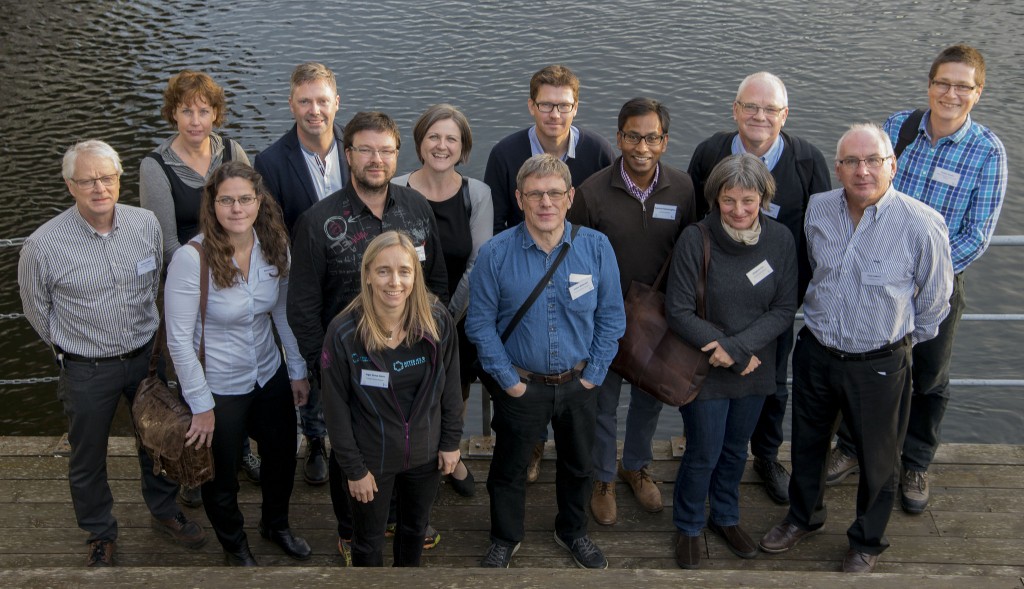
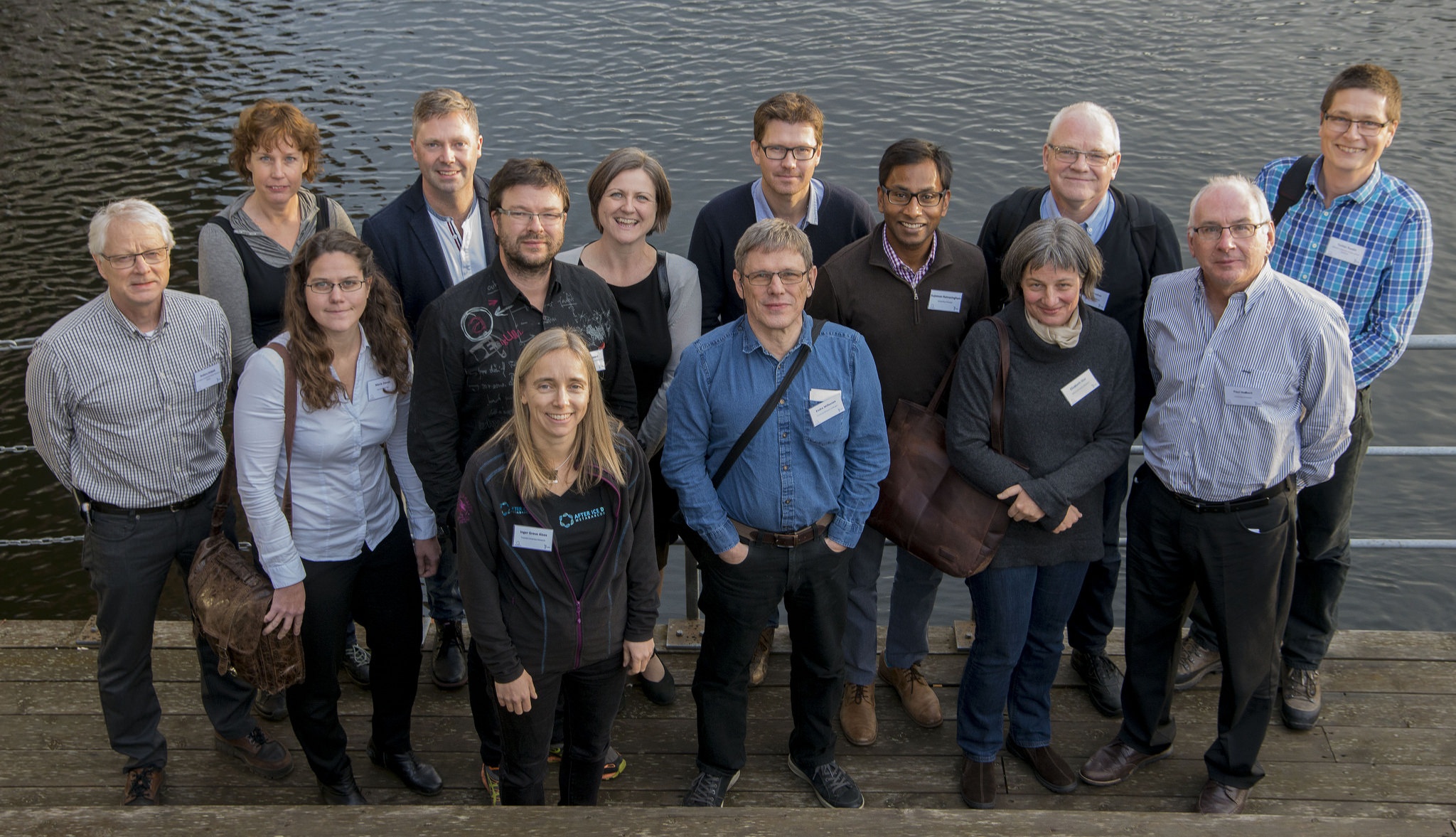
Speakers at the symposium. From left: Anders Hobæk, Christiane Todt, Marie Davey, Hans Tore Rapp, Frode Ødegaard, Inger Greve Alsos, Natasha de Vere, Endre Willassen, Kristian Hassel, Sujeevan Ratnasingham, Elisabeth Stur, Christer Erséus, Paul Hebert, Tomas Roslin. Tor Erik Brandrud and Gunn Paulsen were unavailable when the photo was taken. Photo Åge Hojem, NTNU University Museum, CC-BY.Both organizers and participants seemed very pleased with the conference. Most things went as planned, the food was good, and even if we had music from the neighbouring room accompanying the last presentations on day two, the participants seemed pleased when leaving the venue. Thank you all for coming! More photos are available on Flickr.
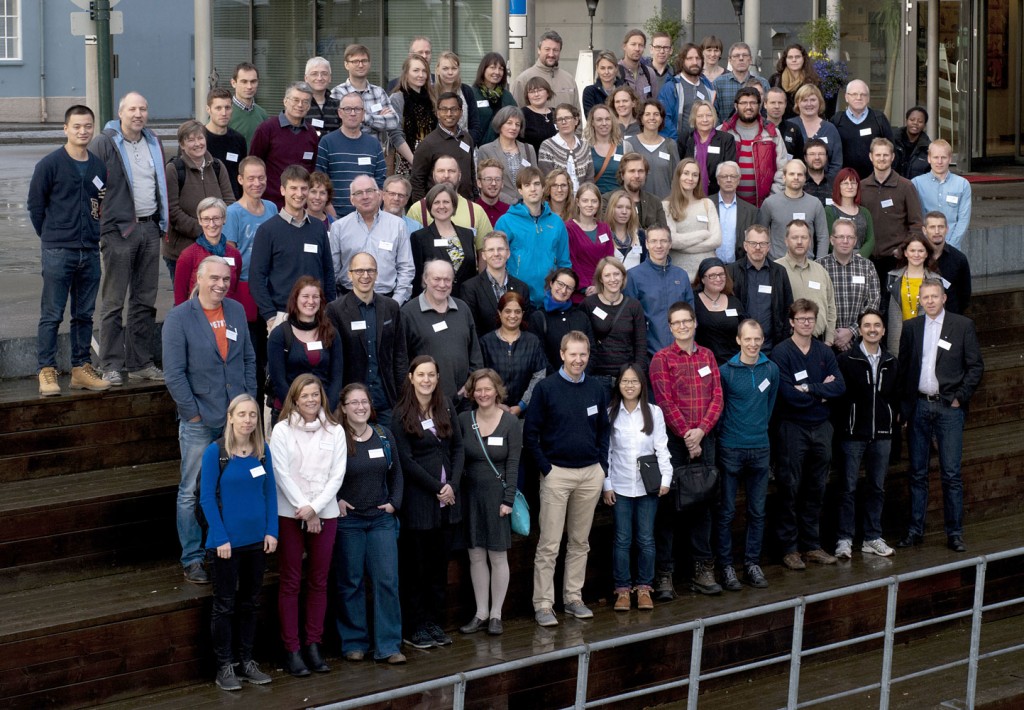
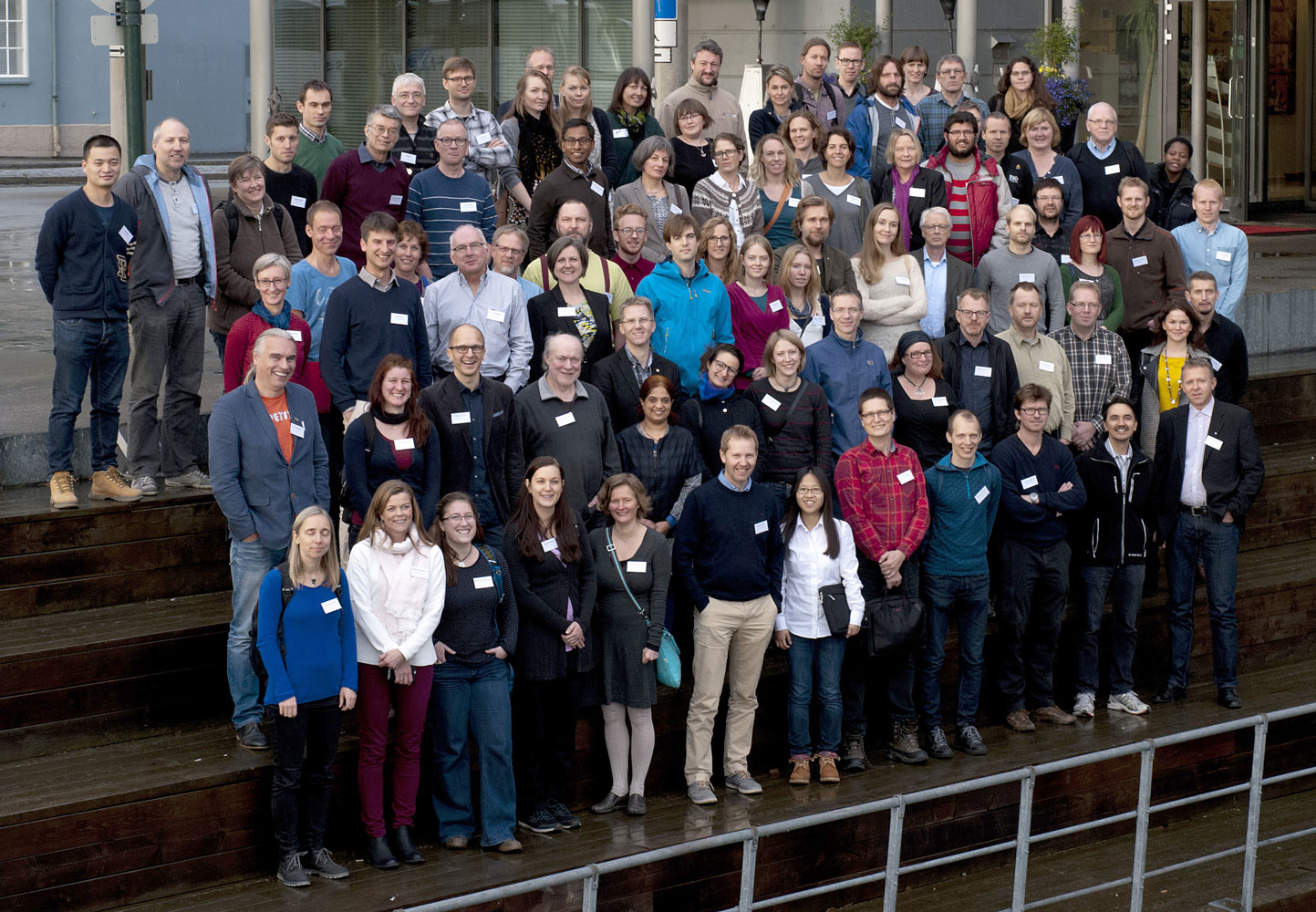
Participants at the symposium Biodiversity and DNA barcoding 2015. Photo Åge Hojem, NTNU Vitenskapsmuseet, CC-BY.Torbjørn Ekrem, NTNU University Museum
-
Vel blåst! Symposium på biodiversitet og DNA-strekkoding
Symposiet Biodiversity and DNA Barcoding ble holdt på Scandic Nidelven hotell 11-12 november 2015. Med nærmere 100 deltakere fra Norge, Sverige, Canada, Finland, Tyskland, Tsjekkia og Storbrittania ble møtet større enn forventet og en flott møteplass for naturforvaltere, strekkodere, artsprosjektdeltakere og andre interessert i biologisk mangfold og DNA-strekkoding.
Som programmet på symposiesidene kan bekrefte, var det stor variasjon i både tema og organismegrupper. Vi ble ledet gjennom taksonomiske utfordringer i soppriket, hos marine invertebrater og hos insekter, mange først oppdaget ved hjelp av DNA strekkoder. Vi ble tatt med på en reise ned i havet og inn i mosen, og introdusert for de mulighetene molekylære metoder gir oss til å studere næringsnett, pollinering og mikroskopiske organismer. Vi fikk høre om The Planetary Biodiversity Mission, nyvinningene som kommer i BOLD4 og om LifeScanner, et citizen-science initiativ der identifisering med DNA-strekkoding blir tilgjengelig for alle.
Foredragsholdere ved symposiet. Fra venstre: Anders Hobæk, Christiane Todt, Marie Davey, Hans Tore Rapp, Frode Ødegaard, Inger Greve Alsos, Natasha de Vere, Endre Willassen, Kristian Hassel, Sujeevan Ratnasingham, Elisabeth Stur, Christer Erséus, Paul Hebert, Tomas Roslin. Tor Erik Brandrud og Gunn Paulsen var ikke tilgjengelige når bildet ble tatt. Foto Åge Hojem, NTNU Vitenskapsmuseet, CC-BY.Både arrangører og deltakere synes godt fornøyd med konferansen. Det meste gikk som smurt, maten var god og selv om det ble musikk fra naborommet til de avsluttende presentasjonene på dag to, var det tilfredse deltakere som forlot Scandic Nidelven etter endt møte. Mange takk til alle deltakere for at dere kom! Flere bilder fra konferansen ligger på Flickr.
Deltakere på symposiet Biodiversity and DNA barcoding 2015. Foto Åge Hojem, NTNU Vitenskapsmuseet CC-BY.Torbjørn Ekrem, NTNU Vitenskapsmuseet
-
Uncovering the hidden diversity of Antarctic springtails
Antarctica is a land of superlatives with biota exposed to the steepest chemical gradients, driest soils, and extreme temperature fluctuations. These conditions, coupled with a history of 80 million years’ worth of glacial cycles have shaped an ecosystem characterised by low biodiversity. Robert F. Scott may be forgiven for stating “we have seen no living thing, not even a moss or a lichen” whilst in the Dry Valleys during 1903.
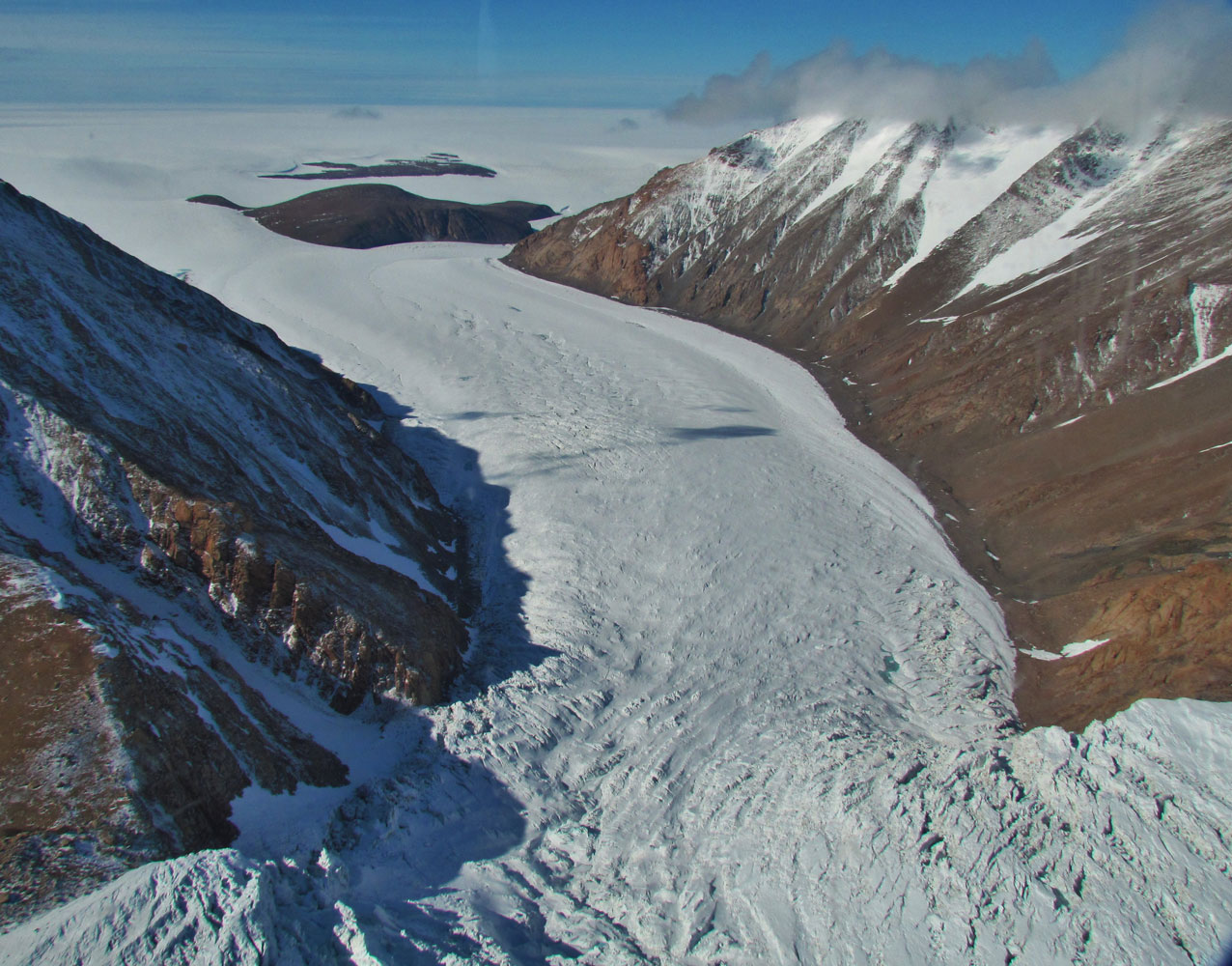
Benson glacier. Photo: Gemma Collins CC-BY.In an area of the Ross Sea region spanning more than six degrees of latitude there are only 10 species of springtail, separated into three distinct biogeographic zones each with three (and in one case four) unique species. Springtails are an important feature of terrestrial Antarctic systems as they are not only the largest year-round inhabitants at a mere1.5mm (with penguins and seals spending much of their time offshore), they are also highly sensitive to environmental disturbances, making them ideal bioindicators of climate change.
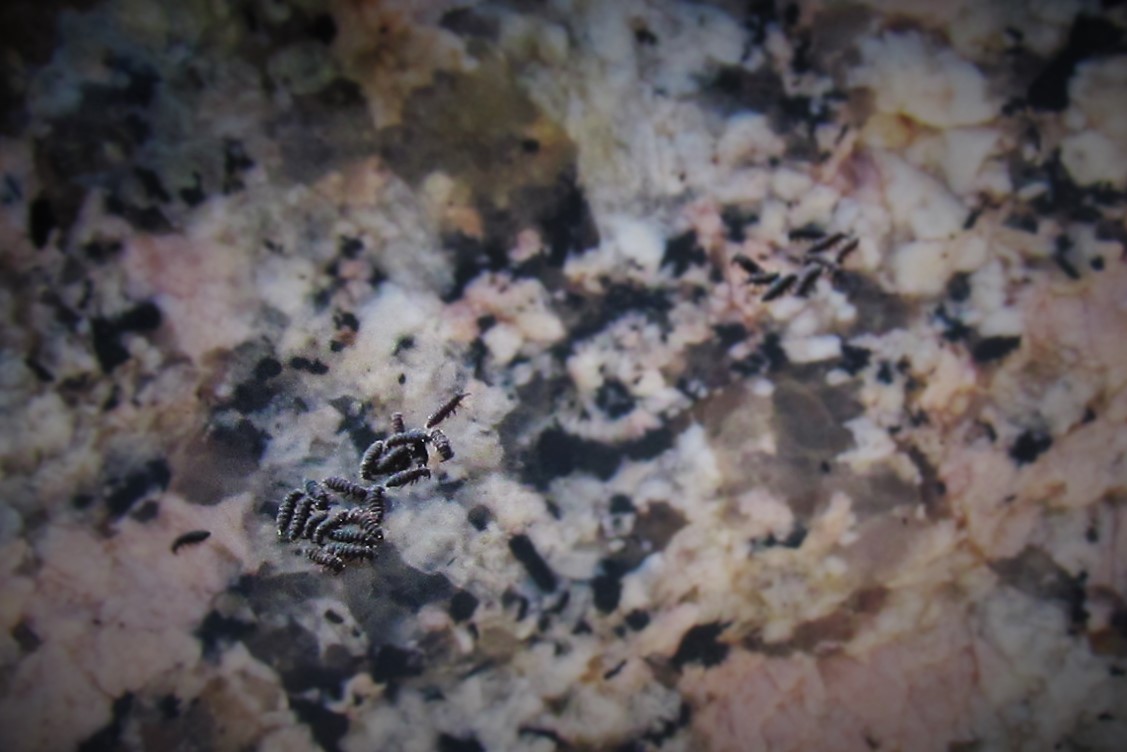
Floating springtails. Photo: Gemma Collins CC-BY.Our most recent work this past season focussed on the “middle” biogeographic zone which revealed a total of six BINs from the original three species present. These three new BINs were between 5-12% divergent from their nearest neighbours. The discovery of these new BINs is a further example of the growing realisation that whilst comparatively depauperate in the global sense, Antarctica is much more diverse than it was once thought to be. This is particularly true in the case of genetic diversity, with the rise in molecular techniques revealing high levels of cryptic biodiversity within Antarctic arthropods. The application of molecular clock dating techniques further suggested that these BINs separated 3-5 million years ago. It was during this time that the Western Antarctic Ice Sheet (WAIS) was thought to have completely collapsed. This phenomenon would have resulted in sea levels rising and increased dispersal opportunities for Collembola via meltwater streams and open sea-ways before the WAIS eventually reformed. The various BINs appear to have remained in relative isolation ever since. The presence of these unique genetic differences means that any future changes in species’ distributions can be easily tracked through the DNA barcoding of individuals. From this, we can further enhance our capacity to detect subtle biological responses resulting from gradual climate changes.
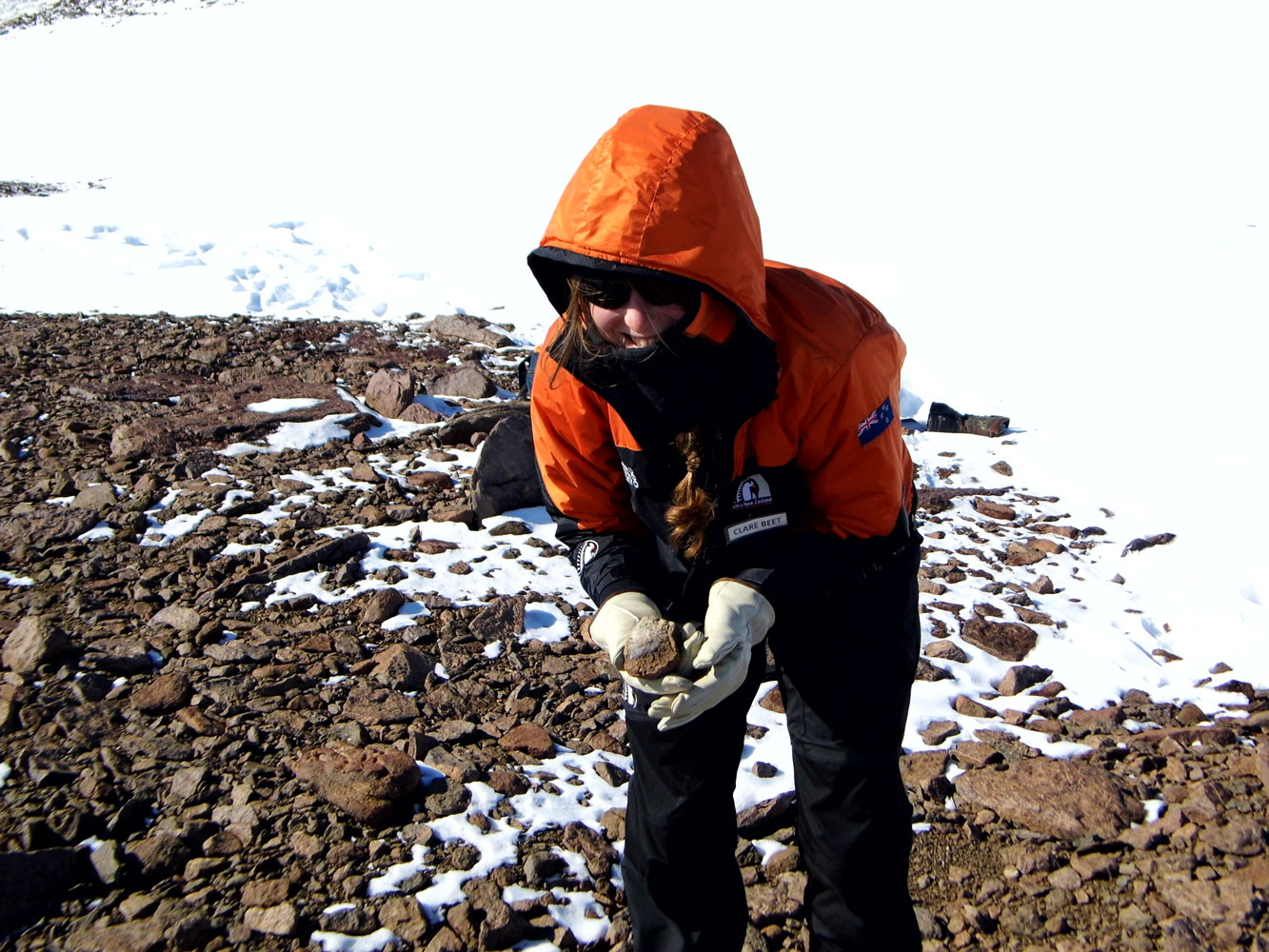
Clare Beet collecting springtails. Photo: Ian Hogg CC-BY.In August, I gave a presentation at the 6th international Barcode of Life conference on my master’s thesis work assessing the distribution and genetic diversity of Antarctic springtails (Collembola). For this presentation I was generously awarded the NorBOL Prize for Excellence in Polar Research. I really enjoyed sharing my work with the wider barcoding community and look forward to hopefully getting involved in polar research in the future.
Clare Beet, University of Waikato
-
Uncovering the hidden diversity of Antarctic springtails
Antarctica is a land of superlatives with biota exposed to the steepest chemical gradients, driest soils, and extreme temperature fluctuations. These conditions, coupled with a history of 80 million years’ worth of glacial cycles have shaped an ecosystem characterised by low biodiversity. Robert F. Scott may be forgiven for stating “we have seen no living thing, not even a moss or a lichen” whilst in the Dry Valleys during 1903.
Benson glacier. Photo: Gemma Collins CC-BY.In an area of the Ross Sea region spanning more than six degrees of latitude there are only 10 species of springtail, separated into three distinct biogeographic zones each with three (and in one case four) unique species. Springtails are an important feature of terrestrial Antarctic systems as they are not only the largest year-round inhabitants at a mere1.5mm (with penguins and seals spending much of their time offshore), they are also highly sensitive to environmental disturbances, making them ideal bioindicators of climate change.
Floating springtails. Photo: Gemma Collins CC-BY.Our most recent work this past season focussed on the “middle” biogeographic zone which revealed a total of six BINs from the original three species present. These three new BINs were between 5-12% divergent from their nearest neighbours. The discovery of these new BINs is a further example of the growing realisation that whilst comparatively depauperate in the global sense, Antarctica is much more diverse than it was once thought to be. This is particularly true in the case of genetic diversity, with the rise in molecular techniques revealing high levels of cryptic biodiversity within Antarctic arthropods. The application of molecular clock dating techniques further suggested that these BINs separated 3-5 million years ago. It was during this time that the Western Antarctic Ice Sheet (WAIS) was thought to have completely collapsed. This phenomenon would have resulted in sea levels rising and increased dispersal opportunities for Collembola via meltwater streams and open sea-ways before the WAIS eventually reformed. The various BINs appear to have remained in relative isolation ever since. The presence of these unique genetic differences means that any future changes in species’ distributions can be easily tracked through the DNA barcoding of individuals. From this, we can further enhance our capacity to detect subtle biological responses resulting from gradual climate changes.
Clare Beet collecting springtails. Photo: Ian Hogg CC-BY.In August, I gave a presentation at the 6th international Barcode of Life conference on my master’s thesis work assessing the distribution and genetic diversity of Antarctic springtails (Collembola). For this presentation I was generously awarded the NorBOL Prize for Excellence in Polar Research. I really enjoyed sharing my work with the wider barcoding community and look forward to hopefully getting involved in polar research in the future.
Clare Beet, University of Waikato
-
Sopptur på Svalbard
Den andre uka i august dro en gruppe utenlandske og norske mykologer på feltekskursjon til Svalbard, og NorBOL fikk bli med å strekkode det de fant! Med base i Longyearbyen dro gruppen på dagsturer til Bolterdalen, Endalen, Blomsterdalen, Bjørndalen og Reveneset.
Siri Rui (UiO) samler inn Russula nana til strekkoding i Bjørndalen. Foto Aina Mærk Aspaas (CC-BY)Ettermiddagene ble tilbrakt på UNISs fasiliteter der materialet ble bearbeidet og vevsprøver ble tatt til sekvensering. Sopp på Svalbard har ikke blitt strekkodet tidligere og turen ga derfor et viktig tilskudd av strekkoder fra arter som vokser i arktiske områder. Ivrige mykologer som var veldig positive til å dele sine funn med NorBOL gjorde at det ble en vellykket tur, og det ble tatt prøver av rundt 70 arter. Mange takk til Håvard Kauserud (UiO) og Pernille Bronken Eidesen (UNIS) for et veldig godt opplegg, og til alle andre deltakere for hyggelig samvær.
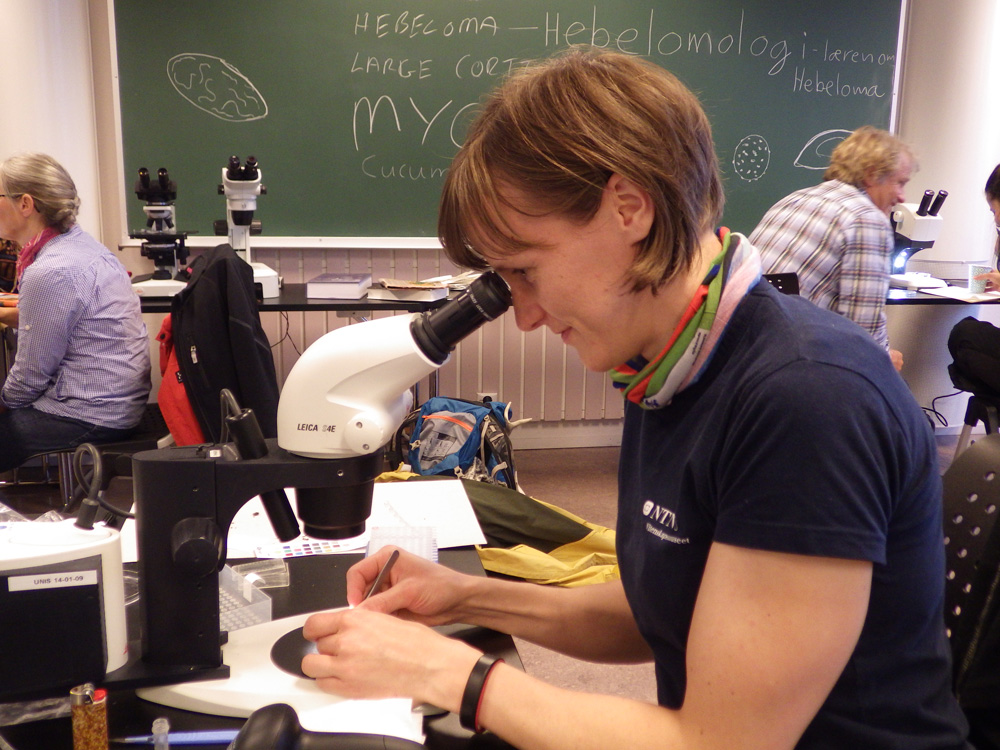
Aina Mærk Aspaas tar vevsprøver av sopp ved UNIS. Foto Siri Rui (CC-BY) -
6th International Barcode of Life Conference
The sixth international conference on DNA Barcoding just recently ended with wise words from Thomas Lovejoy, Dan Janzen and Paul Hebert: The species on our globe are going extinct faster than ever before and we have an urgent need to retrieve more knowledge of our biodiversity before it is gone for good.
The conference in Guelph, Canada was impressive in all sorts of ways and the scientific depth truly underlined the theme “Barcodes to biomes”. With more than 30 excellent invited speakers and 600 delegates from 60 countries, the meeting became an unparalleled academic success. Abstracts from all talks and posters have been peer-reviewed and published in the journal Genome.
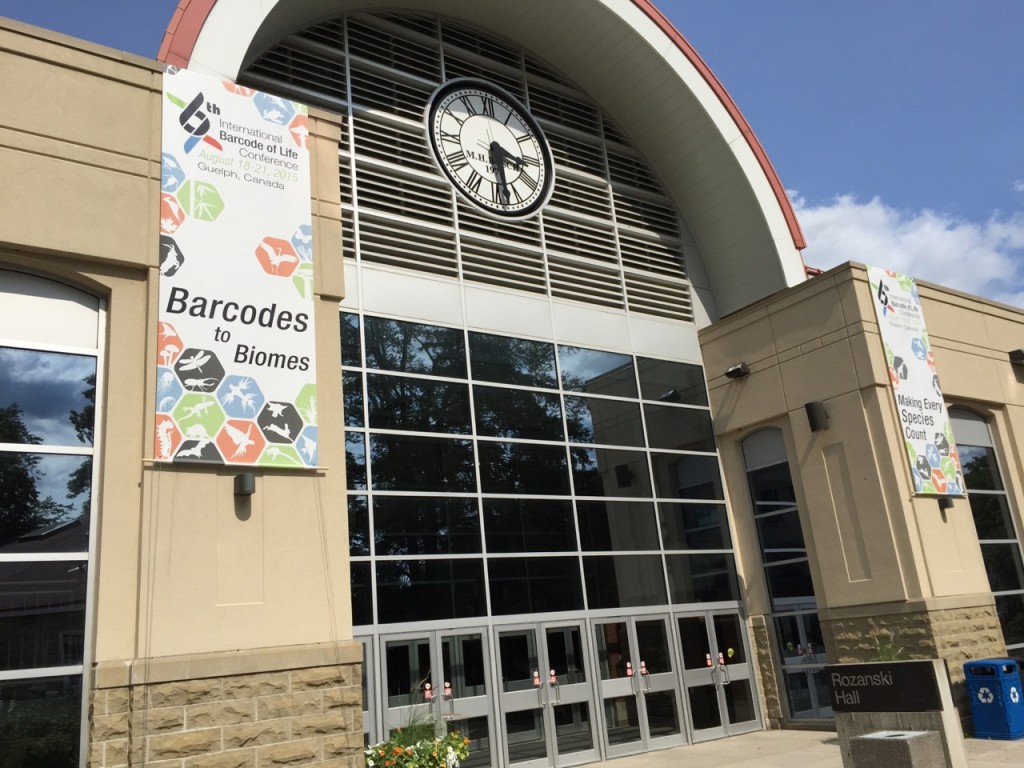
All oral presentations were held in the Rozanski Hall at the University of Guelph. Photo Torbjørn Ekrem (CC-BY).In addition to the academically strong profile, the organizers clearly had valued good social settings in the planning of the conference. Moreover, a few other special arrangements made this a memorable event: The group photo (or rather film) was shot with a drone, the conference had its own beer (that had been barcoded of course) and the talks of all invited speakers was streamed live on YouTube. Most impressive, however, was perhaps that the results from a bioblitz held in a nearby reserve the day before the conference were ready by the end of the meeting! The specimens have been barcoded and the results assembled in a paper with 120 authors already submitted to the Biodiversity Data Journal. If you think I am the only one that is impressed by the 6th International Barcode of Life Conference, check out tweets with the hashtag #dnabarcodes2015.
The meeting decided to establish the International Society for the Barcode of Life (ISBOL) and an interrim board will be established to work out the guidelines and tasks for the society. Two important areas will be the development of new standards for DNA barcoding as technology advances and support the organization of international conferences.
It will be difficult to exceed this year’s conference in scientific breadth and organization. Perhaps this was one the reasons why Prof. Michelle van der Bank from the University of Johannesburg suggested the Krüger National Park as venue for the next conference in 2017. A setting in one of the world’s most famous protected wildlife areas certainly should attract many participants!
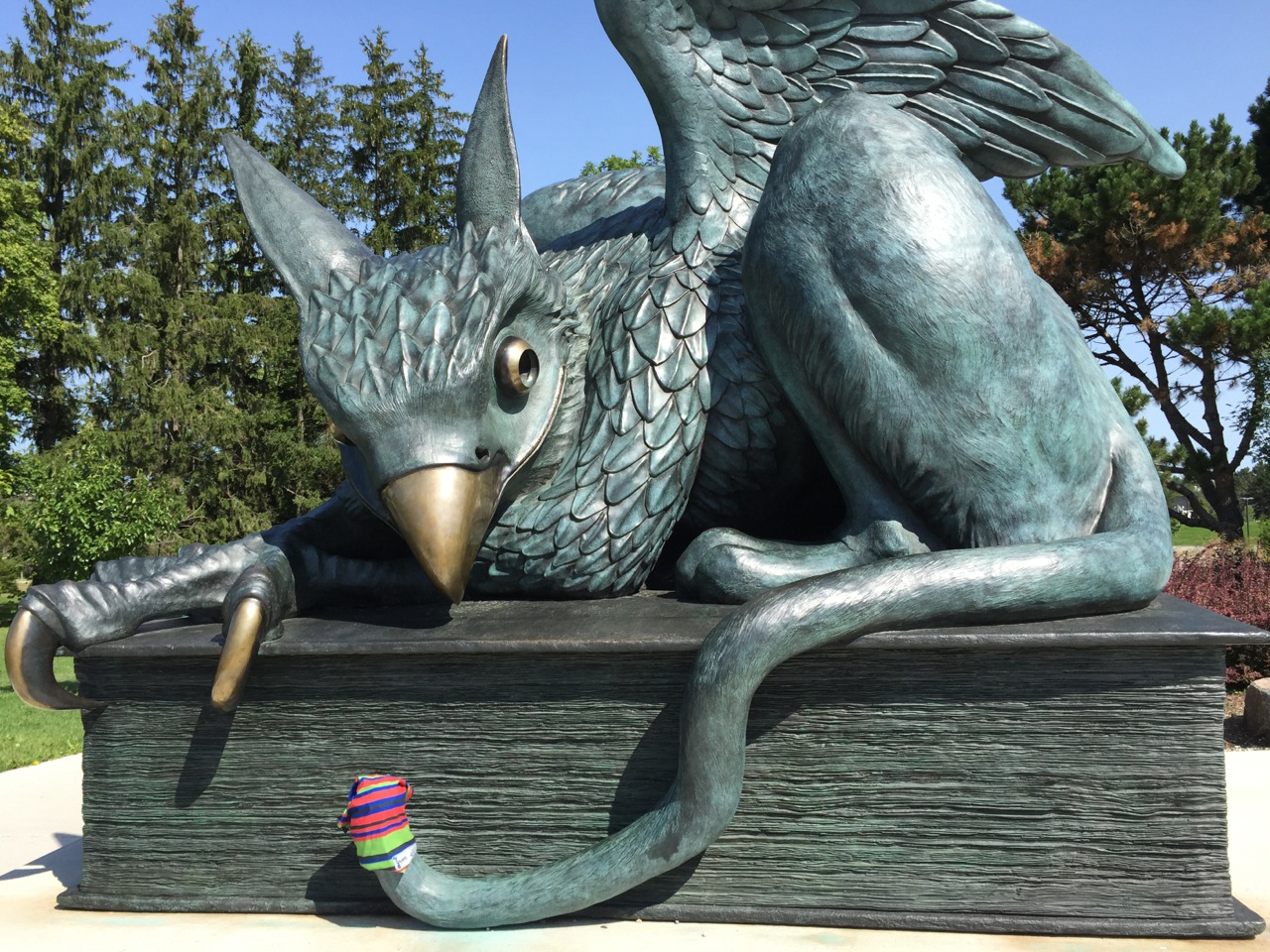
The University of Guelph gryphon bids #mydnabarcode farewell. Photo Torbjørn Ekrem (CC-BY).